



Mart Kivastik
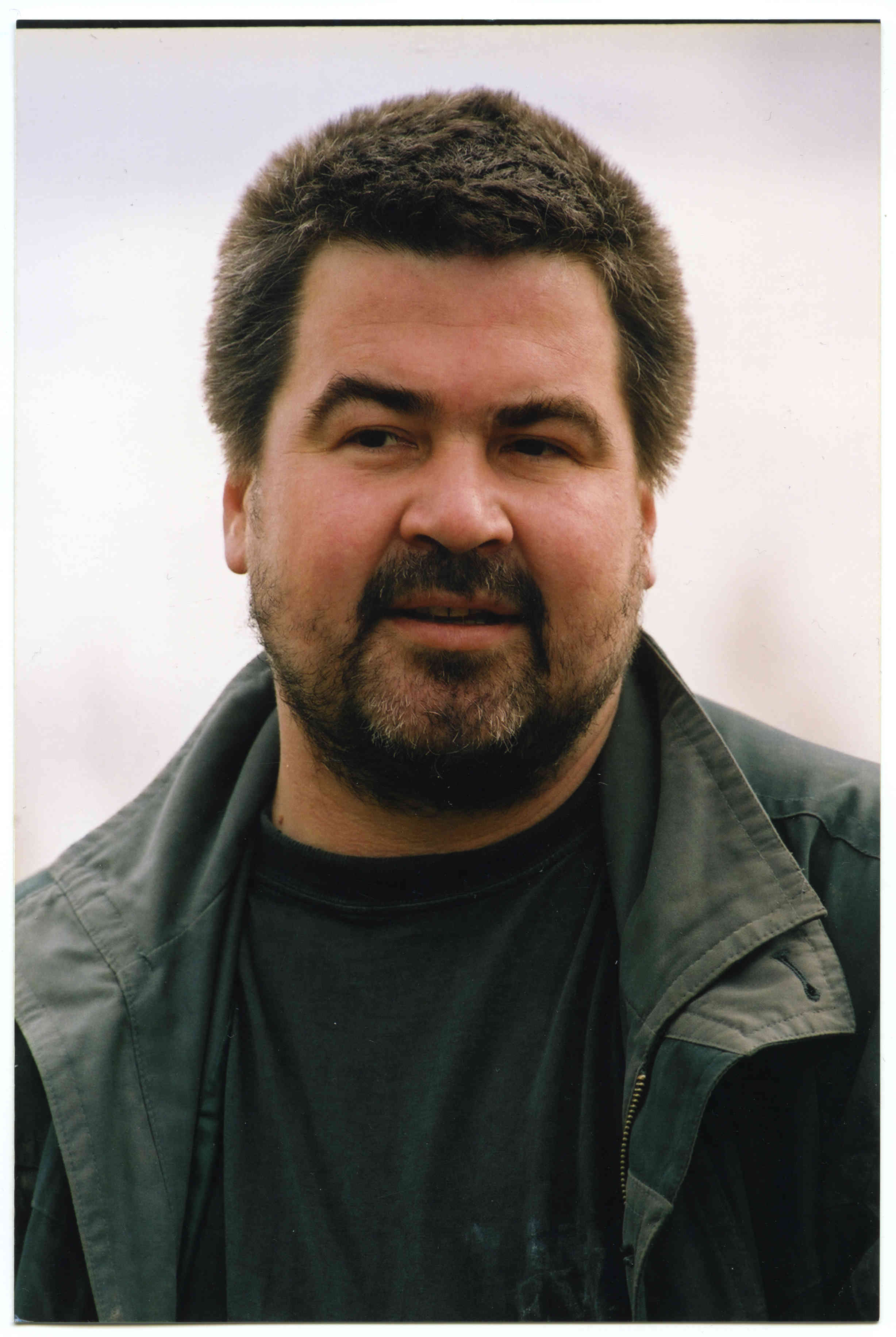
Mart Kivastik (b. 4. III 1963) is a prose writer, playwright, script-writer and film director.
He was born in Tartu. In 1981 he graduated from number 5 secondary school in Tartu, and in 1984 from the Heino Eller music school, specialising in choral conducting. In 1989 Kivastik graduated from the faculty of philology at the University of Tartu, in the field of Estonian language and literature. From 1989 to 1991 he worked at the Tallinnfilm studio. Since then he has been a freelance writer, playwright and film director. Since 1996 he has been a member of the Estonian Writers’ Union. His son is the rapper Põhja-Korea from the band 5Miinust.
Mart Kivastik made his debut with short stories in the newspaper of the University of Tartu and the journal Vikerkaar in 1987. In 1993 he produced the short story collection Homme (‘Tomorrow’). Initially he wrote mainly prose, but in the late nineties he turned to writing plays. In the 21st century Kivastik has emerged as one of the most performed Estonian playwrights.
His plays have been called picturesque. The best-known of them belong to the so-called ‘artist trilogy’: 20th century cultural history is reflected in historical plays about the great figures in Estonian art: Külmetava kunstniku portree (‘Portrait of a Freezing Artist’, staged 2004), Põrgu värk (‘The Infernal Contraption’, staged 2005) and Kits viiuli ja õngega (‘Goat With a Violin and Fishing-rod’, staged 2006). In these texts Kivastik plays with history, without going into direct conflict with truth, but without striving for documentary reality. The author is interested in questions about the purpose of humanity, freedom and the struggle for existence. Kivastik has written several historical plays, such as Sõdur (‘The Soldier’, staged 2007), Kangelane (‘The Hero’, staged 2007), Käsu Hansu ajalootund (‘Käsu Hans’ History Lesson’, staged 2009) and a play about President Konstantin Päts, Kostja ja hiiglane (‘Kostja and the Giant’, staged 2018), which was also staged in Moscow.
The so-called ‘small plays’ (Teener, ‘The Servant’, staged 2003; Peeter ja Erik, ‘Peeter and Erik’, staged 1997) are marked by their completeness, like short stories. They depict characters who have been left to their fates, who sometimes manage nevertheless to get by, in a tragicomic way. These drama texts are depictions typical of a prose author, creating an atmosphere of completeness yet unfathomableness.
In addition to plays, Kivastik has written film scripts. In 1998 and 1999 he was the scriptwriter and producer of two short films. Subsequently he has been the scriptwriter and director of the feature films Üks mu sõber, (‘A Friend of Mine’, 2011), and Õnn tuleb magades, (‘Joy Comes Sleeping’, 2018).
Kivastik has written the novels Varblane (‘Sparrow’, 1999), whose protagonist is based on the poet from Tartu Hannes Varblane, Vietnami retsept (‘Vietnamese Recipe’, 2012); and Taevatrepp (‘Stairway to Heaven’, 2019), which describes the author’s and his friends’ youth in the Tartu of the Soviet era and their love of rock music. The novel was adapted into a feature film of the same name (2023), also written and directed by Kivastik himself. The biographical novel Sure, poisu! (‘Die, Little Boy!’, 2021) is about Johannes Vares-Barbarus. Kivastik has also written the play Vares (staged in 2014) about Barbarus.
He has published colourful stories of everyday life, portraits of other creative people and causeries in the press, as well as literature, theatre and film reviews.
Mart Kivastik is one of the most decorated Estonian authors. Twice, in 1999 and 2015, he has won the Friedebert Tuglas short story prize. He has twice been awarded the Literature Endowment annual award (in 2000 and 2004). For two years (2006 and 2011) he was declared Tartu Culture Bearer. He has also been awarded the journal Sirp’s annual prize, twice the Eduard Vilde prize, the Virumaa literature award, as well as the Baltic theatre award. In 2006 Mart Kivastik was decorated with the Order of the White Star, Class 5 and the Ela ja sära (‘Live and Shine’) scholarship. In 2020-2022, he was one of the recipients of the writer’s salary. In 2023, he was the City Writer of Tartu.
L. P. (Translated by C. M.)
Books in Estonian
Novels
Varblane. Tallinn: Varrak, 1999. 158 lk.
Vietnami retsept. Tartu: Väike Öömuusika, 2012. 285 lk.
Taevatrepp. Tartu: Väike Öömuusika, 2019. 262 lk.
Sure, Poisu!. Tartu: Väike Öömuusika, 2021, 191 lk.
Short prose
Homme. Tallinn: Kupar, 1993. 157 lk.
Palun õnnelikuks. Tartu: Elmatar, 1996. 176 lk.
Hinged lähevad. Tallinn: Soha, 2001. 143 lk.
Kui sa mind ei armasta, ära mine ära. Tartu: M. Kivastik, 2003. 188 lk.
Kurb raamat. Tartu: Väike Öömuusika, 2008. 171 lk.
Autoportree naise ja hobusega. Tartu: Väike Öömuusika, 2015. 220 lk.
Armastuse vormid. Tartu: Väike Öömuusika, 2017. 303 lk.
Kikiimura : jutte ja novelle. Tartu: Väike Öömuusika, 2025, 213 lk.
Plays
Näidendid. Tallinn: Eesti Keele Sihtasutus, 2000. 281 lk.
Presidendi lapsed: lugu kahes vaatuses, 17 pildis proloogi ja epiloogiga [esseed]. Tallinn: M. Kivastik, 2001. 219 lk.
Savonarola. Tallinn: Eesti Draamateater, 2005. 112 lk.
Külmetava kunstniku portreed: Viinistu triloogia. Tartu: Väike Öömuusika, 2006. 302 lk.
Sõdur. Tartu: Väike Öömuusika, 2007. 63 lk.
Teener: see näidend on pühendatud. Tartu: Väike Öömuusika, 2007. 95 lk.
Eesti asjad: näidendid. Tartu: Kaks musketäri, 2010. 284 lk.
Kangelased : neli näidendit Eesti ajaloo pöördelistest aastatest. Tartu: Väike Öömuusika, 2024, 254 lk. [Sisu: Vares ; Kostja ja hiiglane ; Sõdur ; Kangelane.]
