


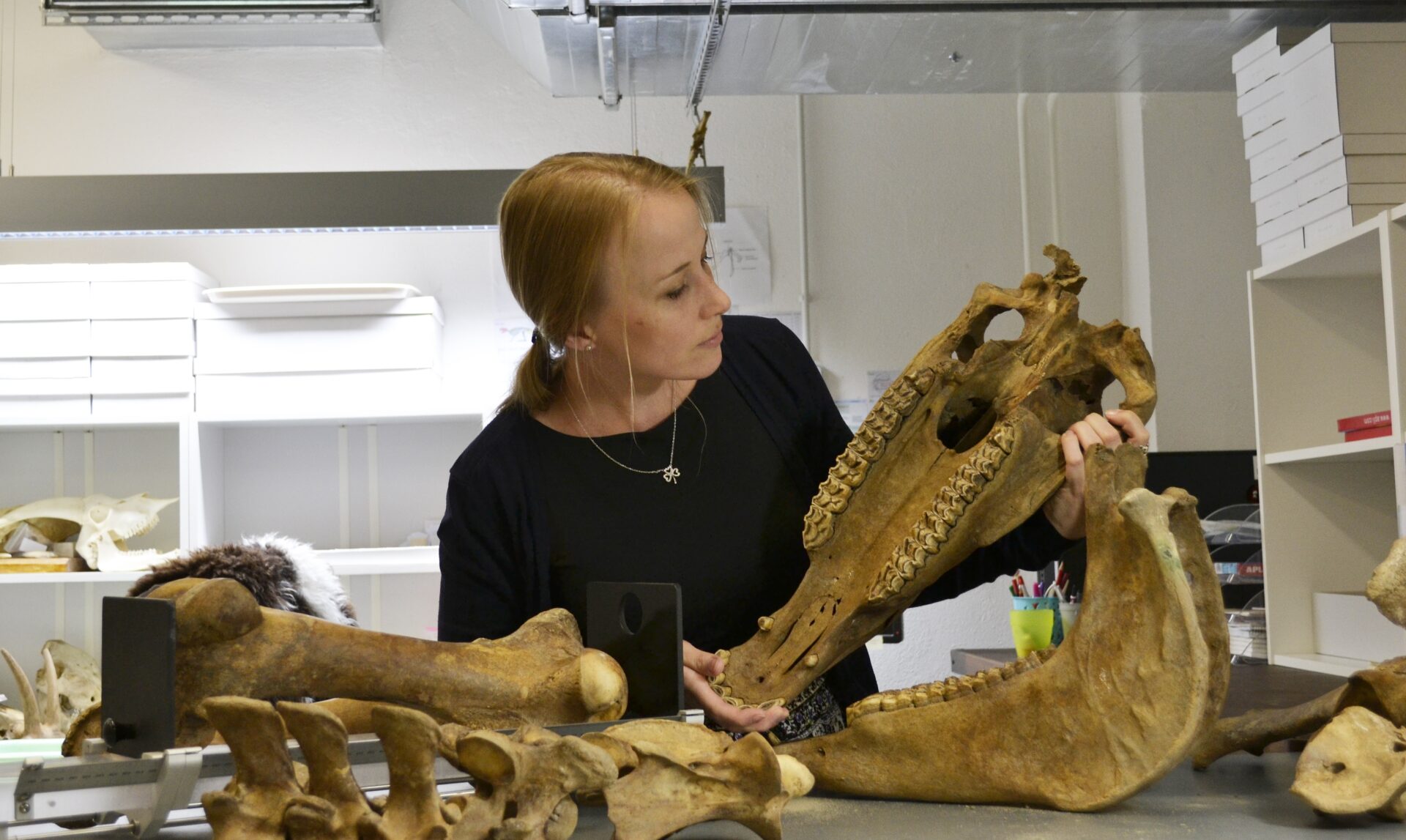
Archaeozoology
The archaeozoology research group brings together researchers from three academic institutions: the Institute of Ecology and Earth Sciences and the Institute of History and Archaeology at the University of Tartu, as well as the School of Archaeology at Tallinn University.
The aim of the archaeozoology team is to study the role of domesticated animals in human history. One of the key objectives is to investigate, through archaeological and genetic methods using animal bones and coprolites, the origins of various domestic animals introduced to our region, the continuity of their populations over time and space, and the changes brought about by environmental shifts and human migrations. We are also interested in how zoonotic diseases—those transmitted between animals and humans—have evolved over time, and how changes in the spread of domestic animals and zoonotic pathogens are interconnected.

Urmas Saarma, PhD
University of Tartu, Institute of Ecology and Earth Sciences, Chair of Theriology, Head of the Archaeozoology Research Group
Members of the research group
Harri Valdmann, Associate Professor of Vertebrate Zoology, Principal Investigator
Eve Rannamäe, Associate Professor of Archaeology, Principal Investigator
Liina Anijalg, Research Fellow in Molecular Parasitology, Principal Investigator
Lembi Lõugas, Associate Professor of Archaeozoology, Principal Investigator; Tallinn University, Archaeology Research Collection
Maris Hindrikson, Research Fellow in Theriology, Principal Investigator
Teivi Laurimäe, Research Fellow in Molecular Parasitology, Principal Investigator
Egle Tammeleht, Research Fellow in Theriology, Principal Investigator
Ants Tull, Research Fellow in Theriology, Principal Investigator
Anti Biedermann, Junior Research Fellow in Parasitology, Investigator
Marlen Laanep, Junior Research Fellow in Theriology, Investigator
Sharon Jõesaar, Junior Research Fellow in Theriology, Investigator
Kirke Raidmets, Junior Research Fellow in Theriology, Investigator
