

Research Team
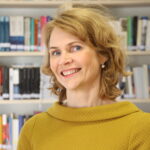
Eva Piirimäe
Eva Piirimäe (PhD, University of Cambridge, 2006) is Professor of Political Theory at the Johan Skytte Institute of Political Studies. Piirimäe is the author of the award-winning Herder and Enlightenment Politics (Cambridge University Press, 2023) and the co-editor of Herder on Empathy and Sympathy/ Einfühlung und Sympathie im Denken Herders (Leiden: Brill, 2020) as well as several special issues. Piirimäe’s research interests include Enlightenment moral and political thought, the intellectual history of the self-determination of peoples and human rights, and historical and contemporary theories of patriotism, nationalism and cosmopolitanism. From 2020-2024 she led a large research project “Self-Determination of Peoples in Historical Perspective” funded by the Estonian Research Council. For more information, see ETIS.
Selected relevant works:
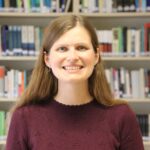
Liisi Veski-Kuldkepp
Liisi Veski-Kuldkepp (PhD in Central and East European Studies, University of Glasgow, 2022) is a Lecturer in the History of Political Thought at the Johan Skytte Institute of Political Studies. Her research focuses on the intellectual history of nation-statehood and democracy in interwar Estonia, as well as the history of Konstantin Päts’s authoritarian regime (1934–1940). From 2022 to 2024, she led the postdoctoral research project The School for Democracy: Co-operation, Civil Society, and Intrastate Federalism in Estonian Intellectual History, 1900–1940, funded by the Estonian Research Council.
Selected relevant works:

Alexander Schmidt
Alexander Schmidt is a Visiting Associate Professor of European Studies at Vanderbilt University and a Visiting Professor of the History of Political Thought at the University of Tartu. His area of expertise is European and German intellectual history from the Renaissance to the 20th Century, especially ideas of patriotism and the intersection between religious, moral and legal thought. Before coming to Vanderbilt he has been a Junior-Professor of Intellectual History at the University of Jena from where he also received his PhD. Dr. Schmidt has held visiting professorships and fellowships at the University of Chicago in 2015-2016, Cambridge in 2011, and the University of Edinburgh in 2009. His first peer-reviewed monograph Vaterlandsliebe und Religionskonflikt: Politische Diskurse im Alten Reich 1555-1648 (Brill, 2007) researches humanist ideas of love of fatherland and their impact on political debates in early modern Germany. His articles have appeared in The Historical Journal , History of Political Thought, Modern Intellectual History, History of European Ideas, Francia, and a number of edited volumes. He is the editor of Friedrich Schiller’s On the Aesthetic Education of Man (Penguin Classics, 2016) and is currently completing the manuscript of his forthcoming monograph Might to Right: Natural Law and Historicist Realism in German Political Thought, 1700-1920 for University of Pennsylvania Press and an edition of Schiller’s essays on universal history for Princeton University Press. He currently researches the idea of the nation state and the role of Christianity in nineteenth-century international law.
Selected relevant works:

Timo Aava
Timo Aava is a historian of modern Europe focusing on the history of political thought and minority rights. He holds a PhD from the University of Vienna. He has held several visiting fellowships and post-doctoral appointments at Yale University, Harvard University, and the University of Oxford. Timo is a Research Fellow in the History of Political Thought at the Johan Skytte Institute of Political Studies, where, as a part of this research project, he will continue research into minorities and ideas of statehood and rights in the Baltics. He is also a Research Fellow at the Institute of History and Archaeology, where he is working on the history of the United Nations in the early 1990s.
Selected relevant works:

Kadi Kähär-Peterson
Kadi Kähär-Peterson is a Research Fellow in the History of Political Thought at the Johan Skytte Institute of Political Studies. In June 2025, she defended her doctoral dissertation at the University of Tartu, Institute of History and Archaeology, entitled Garlieb Merkel’s Political Thought: A Baltic Perspective on Enlightenment. In addition to the Skytte Institute, she works at the University of Tartu in the Institute of Foreign Languages and Cultures as a Research Fellow in Baltic German Culture. Her research focuses on the history of political thought in the Baltic region, with a particular emphasis on Estonian and Baltic German conceptualisations of patriotism and nationalism in a multicultural and multilingual context. She has contributed to public outreach projects in collaboration with several museums and other organizations. For more information, see ETIS.

Hent Kalmo
Hent Kalmo is a guest lecturer in the faculty of law of the University of Tartu. His research has been focused mainly on constitutional law and intellectual history. Under this project, he will be studying the development of the idea of a national state, with a particular emphasis on Estonia but against the broader East-Central European background.
Selected relevant works:
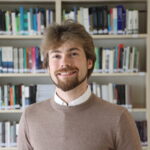
Karl Lembit Laane
Karl Lembit Laane is a Junior Research Fellow and PhD candidate at the Johan Skytte Institute of Political Studies at the University of Tartu. His PhD thesis, entitled “The Crisis and Renewal of Procedural Democracy” focuses on the link between normative political theory and institutional design in democracies to realise the idea of self-determination of the people and to identify mechanisms for guaranteeing equal political freedom. The baseline for this approach is the theory of procedural democracy, contemporarily most popularised by Nadia Urbinati, which has its roots in the works on democracy by the Austrian legal scholar and political theorist Hans Kelsen (1881-1973). Karl Lembit’s work will examine the specific links between Kelsen’s democratic theory and concept of self-determination, including the self-determination of national and cultural minorities in nation-states.
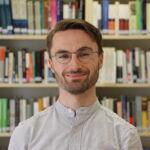
Oliver Rowe
Oliver Rowe (PhD, University of Tartu, 2026) works as an analyst at the Johan Skytte Institute of Political Studies. His doctoral dissertation, Self-determination in Theory and Practice: The Reconfiguration of the ‘Russian’ Empire, 1914-1924, was successfully defended in August 2026, and was supervised by Eva Piirimäe. Oliver’s work in relation to this project is both research-related and technical. On the research front, he will examine Russian nation-state ideas in the first half of the twentieth century, from the legacy of the idea of the All-Russian Constituent Assembly following the Russian Revolution to the conceptions of the Russian nation and/or the Russian state within the famous émigré organisations of Europe and Asia. Beyond research, Oliver maintains and updates the shared bibliographic databases for the project, and is responsible for managing this website, both its English and Estonian versions.
Selected relevant works:


