

The Nation-State as a Transnational Idea: Entangled Perspectives of Great and Small Nations in the Baltic Region
This project explores how the idea of the nation-state has been understood and debated across borders in the Baltic region between 1860 and 1940. Rather than treating the nation-state as a fixed concept, it examines how different thinkers from both large and small nations imagined it in diverse and sometimes competing ways.
Combining historical research with political and theoretical analysis, we study how ideas about national size, power, and vulnerability shaped political thinking. Why did some see the nation-state as a path to democracy and cooperation, while others linked it to authoritarianism, rivalry, or expansion?
At the same time, we recover alternative visions that connected national belonging with cultural autonomy, federalism, and international cooperation. The project also looks beyond this historical period. By tracing how these debates have been reinterpreted since 1989 and how they resonate in today’s discussions about sovereignty, democracy, and international order, we highlight the continuing relevance of these ideas.
Bringing together perspectives from Estonia, Latvia, Finland, Poland, and the surrounding great powers, the project offers a new, transnational understanding of how nation-state ideas developed—and why they still matter today.
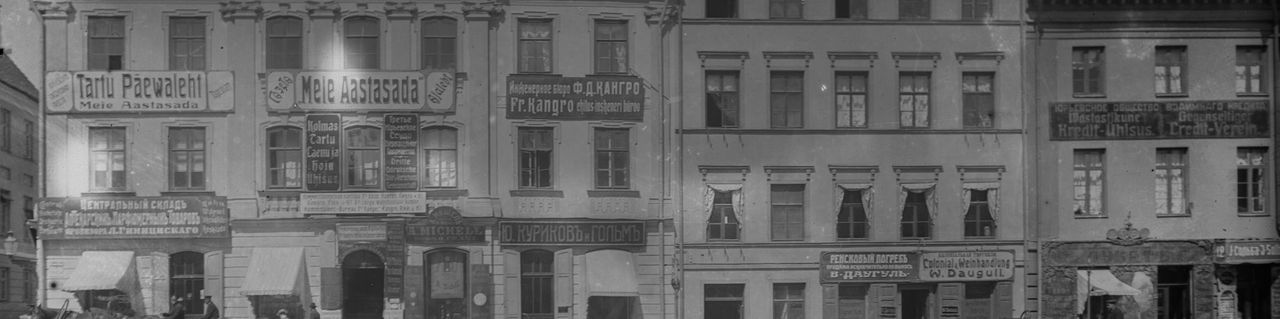
The featured image above depicts a detail of Tartu’s Town Hall Square in 1914. Photo by Johannes Pääsuke (Estonian National Museum).


