Programme
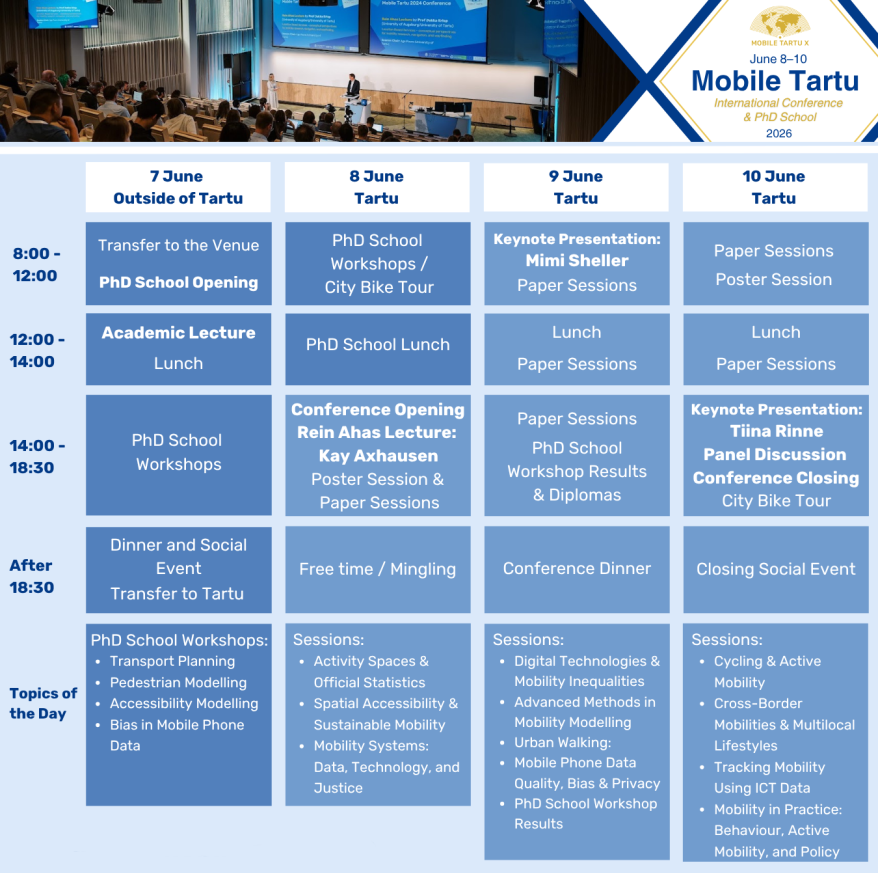
June 7, Sunday – PhD School
Transfer busses are available from Tallinn and Tartu – subject to registration.
Bus from Tallinn will depart at 8:15!
Bus from Tartu will depart at 9:45, please gather at the departure location by 9:35!
Those who come from Tallinn can store their luggage for the day at the venue.
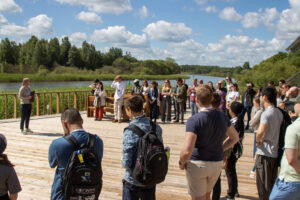
PhD School opening with a traditional round! Be prepared: how many times have you attended Mobile Tartu?
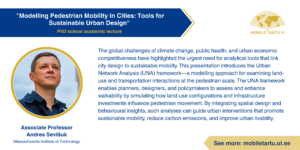
Academic lecture is chaired by Anto Aasa (University of Tartu)
Detailed information on the workshops is available here. Registered participants will receive information about their allocation to workshops and eventual preparation recommendations before the event.
Be prepared for swimming and sauna!
Organised transport to Tartu for all PhD School participants.
June 8, Monday
8.30-18.30 Registration Desk is Open
We start the day at Oecologicum in Tartu.
Detailed information is available here.
Participants will continue their workshop activities and prepare for the joint presentations on June 9.
Information about the optional City Bike Tours will be delivered to registered participants. The number of available spots is limited, but another tour will be arranged on June 10.
The tour will be guided by Karl Saidla.
Participants will gather for the tour at the conference registration desk at 11:00.
You will have time thereafter to enjoy lunch in the city centre of Tartu, and be back at the conference venue before 14:00.
Lunch for the PhD School attendees will be provided at Vilde ja Vine which is a location within walking distance from the venue.
Registration desk is open throughout the day (8:30-18:45). Be at the venue well before 14:00 – the opening session – to receive your attendee badge.
Conference opening ceremony
- Prof. Toomas Asser, Rector of the University of Tartu
- Kertu Vuks, Deputy Mayor of the City of Tartu
- Assoc. Prof. Age Poom, Head of the Mobility Lab
Session chair: Harvey Miller (The Ohio State University).
Find more information about the Rein Ahas Lecture series here.

Mobile Tartu X is open! Let’s celebrate 20+ years of mobility studies with mobile positioning data.
| Leonardo Monteiro Fialho (Universitat Jaume I), Carlos Granell, Sergio Trilles | Development of an Open-Source Framework to Support Public Transport Data Management |
| Karen Valitov (Eindhoven University of Technology), Melvin Wong, Soora Rasouli | Unseen Trade-Offs: Policy, Corporate Practices, and Citizen Awareness in Mobility Data Sharing and Governance |
| Leonardo Akinaga Moreira (University of São Paulo), Mateus Humberto, Orlando Strambi | Mobile Positioning Data, Mobility Data Justice and Transport Equity in the Global South: A Review of Recent Advances and Research Gaps |
| Allison Fernández-Lobo (Universidad Politécnica de Madrid), Andrés Monzón | Dynamic Management in Multimodal Transport Stations: Digital Tools to Improve Operational Efficiency and User Experience |
| Aashish Adhikari (Norwegian University of Science and Technology), Agnar Johansen, Alenka Temeljotov-Salaj | Digital Prototyping: An Alternative Methodology for Mobility Planning Research |
| Benoît Lebrin (KU Leuven), Ate Poorthuis, Age Poom | Mapping Places that Matter: A Mixed-Methods Approach to Activity-Space Research in a Student City |
| Kadi Kass (University of Tartu) | Studying Everyday Routes and Welcoming Places with People with Mental Health Difficulties: Qualitative Perspectives |
| Julia Cristina Abrami Rangel (Pontifícia Universidade Católica do Paraná), Agnes Silva de Araújo, Joana Barros, Geisa Tamara Bugs | Unequal Paths: An Intersectional Analysis of Women’s Everyday Mobility in Contexts of Urban Vulnerability in the Global South |
| Junren Wang (Ghent University), Tanhua Jin, Ziqi Yang, Frank Witlox | Assessing Spatial Equity of Elder Care Accessibility across Income Groups: Implications of the Built Environment |
| Mariana Huskinson (University of Alicante), Álvaro Bernabeu-Bautista, Leticia Serrano-Estrada | Care-Sensitive Accessibility Assessment in Transport Nodes |
| Paul Bairoh (Tampere University), Tiina Rinne | Inequalities in Urban Mobility for Well-Being: Who Gets Access and Opportunities to Well-Being Supporting Locations in Mid-Sized Nordic Cities? |
| Juri Petruhhin (Tallinn University) | Accessibility Considerations in Public Transport Provision Standards for Rural Areas |
| Muhammad Zain Abid (Luxembourg Institute of Socio Economic Research), Veronique Van Acker, Philippe Gerber | Towards a Conceptual Framework of Hybrid Accessibility |
| Simone Aumann (Technical University of Munich), Lukas Baier, Elisa Breyer, Mareike Schmidt | “It Should Be Animal-Friendly and People-Friendly”: Children’s Perspectives in Urban Space Transformations |
| Buland Kumar Pradhan (University of Tartu), Orhun Ege Özpay, Joseph Jacob Kulathinal | Detecting and Explaining Irregular Bus Mobility Patterns Using Direction-Aware Dynamic Time Warping |
| Zijun Ding (Ghent University), Liang Dai, Kurt Fuellhart, Frank Witlox | A multi-scale framework for analysing and modelling urban networks: Evidence from China’s intercity HSR connectivity network |
| Vahid Noroozi (Dresden University of Technology), Jonas Wübbenhorst, Regine Gerike | Exploring Determinants of Traveler Mode Choice for Urban Regional Air Mobility (URAM) Using an Innovative SP-off-RP Data-Driven Mode Choice Modelling Approach |
| Liwen Wang (Ghent University), Shengrun Zhang, Kurt Fuellhart, Frank Witlox | Identifying Airline Network Vulnerability in the Transatlantic Market: A Layered Network Efficiency Approach |
| Mariana Montero Vega (Universidad Politècnica de Catalunya), Miquel Estrada Romeu, Marcella Kaplan, Astrid Wollenber | Incentives and Coalition Formation in Last-Mile Logistics: A Game-Theoretic Approach to Autonomous Delivery Robots and Parcel Lockers Delivery |
| Eva Hajčiarová (Czech Technical University in Prague), Jiří Růžička, Tomáš Tichý | Ethical Aspects of License Plate Matching Outputs |
| Daiga Paršova (University of Tartu), Gonçalo Santinha, Marith Dieker, Jéssica Tavares, Gijs van Stekelenburg, Age Poom | From Niches to Neighbourhoods: Justice and Socio-Technical Conditions Shaping EV Uptake in Vulnerable Neighbourhoods |
| Daniele Martini (Politecnico di Milano), Michela Longo | Interchange Parking as a Mobility–Energy Interface: Data-Driven Scheduling of EV Charging Strategies |
| Mergime Ibrahimi (Tallinn University of Technology), Anu Masso, Sven Kesselring, Kateryna Lobanova, Denis Newman-Griffis | In the Blind Spot of AI-based Mobility: Eye-Tracking Visual Attention to People with Reduced Mobility in Autonomous Vehicles and the Ethics of Inclusive Design |
| Newsha Modjrian (Aalto University), Henrikki Tenkanen | Equity, Heat Ezxposure, and Access to Coastal Cooling Spaces: A Risk Assessment Framework for Italian Coastal Cities |
| Xin Su (University of Lisbon) | Integrating Health in Sustainable Public Transport Transitions Accessibility, Active Mobility, and Clean Technologies: A Case Study of Bus Electrification in Shenzhen |
| Emiliano Beltran (University of Liverpool), Francisco Rowe, Carmen Cabrera, Donna Clarke, Lorenzo Cattarino | Safeguarding Urban Communities: Assessing the Impact of the Spatial Structure of Urban Mobility on the Spreading of Infectious Diseases |
Session chair: Olle Järv (University of Helsinki, University of Tartu)
| Anto Aasa (University of Tartu) | Registry-Based Activity Spaces Across the Life Course |
| Olena Holubowska (University of Neuchatel), Katarzyna Sila-Nowicka, I-Ting Chuang, Ate Poorthuis | Measured and Perceived Diversity in Urban Activity Spaces |
| Siiri Silm (University of Tartu), Margus Tiru, Veronika Mooses, Anto Aasa, Janika Raun, Erki Saluveer, Kaisa Vent, Age Poom, Olle Järv, Ago Tominga | Framework and Methodology for Transforming Mobile Phone Data into Activity Space-based Population Statistics |
| Kaisa Vent (Positium), Margus Tiru, Gerttu Pilsas, Erki Saluveer, Ivan Vasilyev, Oliver Bollverk, Anto Aasa | Using Mobile Positioning Data for Validation and Signs-of-Life in a Register-Based Population Census |
| Paul Blanchard (World Bank), Sveta Milusheva, Francisco Rowe, Stefania Rubrichi | Selection Bias in Phone-Based Migration Statistics: Evidence and Correction Strategies |
Session chair: Jukka Krisp (University of Augsburg)
| Elias Willberg (University of Helsinki), Robert Klein, Milad Malekzadeh, Silviya Korpilo, Kamyar Hasanzadeh, Vuokko Heikinheimo, Rory Taylor, Tuuli Toivonen | Towards Global Modelling of Pleasant Accessibility for Walking and Cycling |
| Egor Kotov (Max Planck Institute for Demographic Research/Universitat Pompeu Fabra) | From Spatial Accessibility to Realized Mobility: Evaluating Personal Constraints Using Population-Representative GPS Data |
| Zuzana Macuchova (Dalarna University), Daniel Brandt | Beyond the Morning Peak: Evening Public Transport Accessibility to Municipal Centres for Young People in Sweden |
| Raul Kalvo (inphysica technology) | Valuating Sustainable Mobility Through Integrated Land-Use and Public Transport Accessibility |
| Harvey J. Miller (The Ohio State University), Tshui Mum Ha | Space-Time Accessibility Cube (STAC): A Framework for Exploration and Analysis of Micro and Macro Accessibility Patterns |
June 9, Tuesday
8.30-17.00 Registration Desk is Open
Session chair: Tuuli Toivonen (University of Helsinki)

Session chair: Maria Lindmäe (Tallinn University)
| Dmitry Boyko (Leibniz University Hanover) | Digital Mobility Inequalities: An Intersectional Perspective on App-Based Mobility Services |
| Helena Gartmeier (Technical University of Munich), Candace Brakewood, Allister Loder | Using Semi-Passive Travel Diaries to Investigate Gender-Based Effects of Spatio-Temporal Mobility Behaviour |
| Pauline Baudens (Tallinn University of Technology) | The Unequal Benefits of Mobility Apps for Women in the Global South |
| Anu Masso (Tallinn University of Technology), Mergime Ibrahimi, Ahti-Veikko Pietarinen, Frauke Behrendt, Srijoni Bhattarcharjee | Perceiving Justice in the AI City: Global Evidence from an Eye-Tracking Study of Autonomous Mobility |
| Matthew Zook (University of Kentucky), Francisco Kerche, Mark Graham | The Silicon Gaze: A Typology of Biases and Inequality in LLMs through the Lens of Place |
Session chair: Anto Aasa (University of Tartu)
| Luc Wismans (University of Twente/Goudappel), Oskar Eikenbroek, Eric van Berkum, Henk Taale | The Value of Public-Private Cooperation for Proactive Traffic Management: A Game-Theoretical Analysis of Infrastructure Renovation Scenarios |
| Ayumi Arai (Reitaku University/University of Tokyo), Apichon Witayangkurn, Lamin Dibba | Planning under Data Scarcity: Targeting Efficiency in CDR-Based Transport Simulation |
| Luuk Brederode (Goudappel/TU Delft), Esther Julien, Jesse Voorhorst | Development and Application of Novel Methods for Automated Discrete Choice Model Specification |
| Age Poom (University of Tartu), Anto Aasa, Martin Haamer, Philip Knirsch, Ago Tominga, Janika Raun, Arko Kesküla, Helen Tera, Shan Wu, Jürgen Öövel, Erki Saluveer | A Data-Rich Approach for Activity-Based Mobility Modelling |
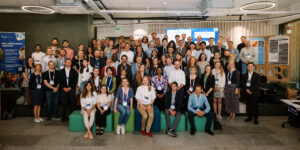
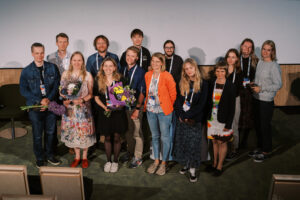
Let’s gather for the traditional group photo!
Lunch at Vilde ja Vine, which is located within a walking distance from the venue.
Session chair: Ate Poorthuis (KU Leuven)
| Tauri Tuvikene (Tallinn University) | Using Diverse Data for Mobility Studies |
| Ines Kawgan-Kagan (University of Bayreuth), Franziska Meinherz, Jana Mayer | Invisible Injustices: Operationalising Mobility of Care for Critically Scrutinising Blind Spots in National Travel Surveys |
| Maria Lindmäe (Tallinn University) | Affective Vélomobilities of Care: Critical Reflections on Using Digital Mapping and Drawing for Informing Care-Friendly Planning Practices |
| Thomas Birtchnell (University of Wollongong) | Mavericks on Mobility Scooters: Socio-Technical Transitions and Electric Vehicle Mobilities |
| Karen Curiel Ruiz Velasco (Ghent University), Ate Poorthuis, Hannah Hook, Frank Witlox | Crossing the Boundary? Sociospatial Segregation and Leisure Mobility in Guadalajara, Mexico |
Session chairs: Esperanza Magpantay (International Telecommunication Union), Siim Esko (Positium)
| Francisco Rowe (University of Liverpool), Carmen Cabrera | Adjusting Distortions in Human Population Data from Mobile Phone Location Data |
| Maike Gatzlaff (University of Auckland), Katarzyna Sila-Nowicka | Behaviour-Preserving Protection of Mobile Phone Users’ Sensitive Locations Through Cloaking and Trajectory Swapping |
| Marina Toger (Uppsala University), Aviv Hazan, Dan Vilenchik | CDR to Trajectories: Map Matching with Synthetic Data and HMM Inference |
| Gloria Deetjen (Destatis) | Researching Mobile Network Operator Data for Mobility Analyses in Official Statistics |
Session chair: Matthew Zook (University of Kentucky)
| Francisco Rowe and Carmen Cabrera (University of Liverpool) and PhD School participants | Correcting Biases in Mobile-Phone Mobility Data: The DEBIAS Framework |
| Robin Lovelace and Juan Fonseca-Zamora (University of Leeds) and PhD School participants | Data Science for Transport Planning: from origin-destination to route network datasets |
| Andres Sevtsuk (MIT) and PhD School participants | Pedestrian Modelling with Urban Network Analysis |
| Anto Aasa, Ago Tominga and Martin Haamer (University of Tartu) and PhD School participants | Regional Inequities in Accessibility: Comparative Analysis of GTFS and Passenger Counts |
Session chair: Katarzyna Sila-Nowicka (University of Auckland)
| Andres Sevtsuk (MIT), Liu Liu, Niaz Zafri | Does Pedestrian Accessibility Reflect Pedestrian Activity? A Comparative Evaluation of Accessibility Metrics and Walking Behavior Around Residential Locations. |
| I-Ting Chuang (University of Auckland), Danjie Shen | Shifting from Necessity to Leisure: Behavioural Patterns in Urban Walking Revealed by Mobile Phone Data in Auckland |
| Avital Angel (Technical University of Munich) | Do Boulevards Attract More Walking? A Multi-Scale Study Using GPS-Derived Big Data |
| Shir Gravitz-Sela (Technion – Israel Institute of Technology), Dalit Shach-Pinsly, Pnina Plaut | Usage Patterns in Urban Parks: A GeoAI-Based Analysis of Age, Gender, and Group Size Using Computer Vision |
| Elise Jalonen (University of Tartu), Veronika Mooses, Age Poom | Perceived Readiness of Car Users to Adopt Cycling |
The conference dinner will be held in the White Hall of the University of Tartu Museum, located in the historic cathedral on Toome Hill, showcasing the university’s rich research heritage.
The social programme will take us back to the early days of mobile positioning, and more!
June 10, Wednesday
8.30-17.30 Registration Desk is Open
Session chair: Thom Birtchnell (University of Wollongong)
| Karl Samuelsson (University of Gävle), Torvid Kreisler, Noah Linder, Elena Farahbakhsh Touli, Matteo Giusti | Should I Cycle or Drive? Active-to-Passive Travel Directness and Mode Choice across 15 Months of GPS-Traced Trips |
| Veronika Mooses (University of Tartu), Elise Jalonen, Age Poom | When the private car is not available: Assessing car travel alternatives in four Baltic Sea cities |
| Johannes Huber (Heidelberg University), Nir Fulman, Yulia Grinblat, Kathrin Foshag, Unut Türk, Marina Toger, Sven Lautenbach, Alexander Zipf | Leisure Walking Routes Among Older Adults: Insights from a Multi-City Revealed-Preference Experiment |
| Anja Härkönen (South-Eastern Finland University of Applied Sciences), Elina Hasanen, Paul Bairoh, Samira Ramezani, Karen Villanueva, Tiina Rinne, Arto Pesola | Effects of a Multi-Method Intervention to Increase Active and Sustainable Travel Among Secondary School-Aged Adolescents: A Cluster-Randomized Controlled Trial |
Session chair: Anu Masso (TalTech)
| Olle Järv (University of Helsinki), Tuomas Väisänen, Michaela Söderholm, Håvard Aagesen | Exploring Cross-Border Integration in Border Regions Using Spatio-Temporal Patterns of Human Mobility: A Mobile Big Data Approach |
| Céline Van Migerode (KU Leuven), Ate Poorthuis, Ben Derudder | The Varying Effects of National Borders on Everyday Mobility |
| Lika Zhvania (University of Augsburg), Jukka M. Krisp | Cross-Border Academic Mobility from Publication Affiliations: Evidence from Co-authorship Networks (2000–2024) |
| Ago Tominga (University of Tartu), Kerli Müürisepp, Siiri Silm, Olle Järv | Integration of Transnational People in the Context of Social Disruptions: Estonians in Finland during the COVID-19 Pandemic |
| Anirudh Govind (KU Leuven) | Circulation in India: A Smartphone App-Based Dataset of Temporary Migration |
| Manuel Díaz Cordero (Dresden University of Technology), Johannes Weber, Ellen Glocar, Stefan Hubrich, Regine Gerike | Inferring Work-from-Home from Travel Surveys: A Multi-Data Approach |
| Raul Garcia Estevez (University of Tartu) | The Spatial Impact of the Digital Transition: Understanding Country-Wide Residential Mobility Among Teleworkers in Estonia |
| Wei-Chieh Huang (Technical University of Munich), Ana Tsui Moreno, Kelly J. Clifton | Does One Partner’s Teleworking Affect the Other Partner’s Teleworking? Telework Arrangement and Gender Differences in Dual-Earner Households in Germany |
| Edvards Jurgis Auzans (University of Latvia), Maris Berzins | The Migration-Commuting Nexus in Latvia’s ‘Left-Behind’ Places |
| Thomas Dimos (Centre for Research and Technology Hellas – Hellenic Institute of Transport), Alexandros Siomos, Eleftherios Pavlou, Fokion Karavasilis, Josep Maria Salanova Grau | Spatiotemporal Mobility Patterns of Thessaloniki, Greece, from Mobile Network-Derived D’ata |
| Laura Altin (University of Tartu), Siiri Silm, Kati Teppo | Mapping Event-Driven Visitor Mobility: Spillover Effects of Tartu 2024 |
| Juliette Le Corguillé (KU Leuven), Tomas Crols, Ate Poorthuis | Including Mobility Needs in Transport Modeling |
| Stefana-Iuliana Gania (University of Gävle), Camila Velez Mejia, Karl Samuelsson | Traveller Profiles and Cycling Potential: A Latent Class Analysis Across Four Baltic Cities |
| Jürgen Öövel (University of Tartu), Anto Aasa, Martin Haamer | Mobility personas of Estonia |
| Yanjie Lu (University of Edinburgh), Alessia Calafiore, Miguel Paredes Maldonado | Transport Equity in Dockless Bike-Sharing: Behavioural Clustering and Socioeconomic Patterns in Shenzhen |
| Noah Gollnick (TU Braunschweig), Dirk Christian Mattfeld | Offer Ranking for Ride-Hailing Meta-Platforms |
| Jonas Wübbenhorst (Dresden University of Technology), Rico Wittwer, Regine Gerike | Joint Trips and Activities within Households: Methods and Evidence from Three German Surveys |
| Philip Milan Knirsch (Positium) | Activity-Based Mobility Model: Estonian Case Study |
| Shan Wu (University of Tartu), Helen Tera, Amnir Hadachi | Operationalizing Activity-Based Demand Models for Urban Traffic Flow Estimation |
| Juan Arquero (University of São Paulo), Guillermo Gutiérrez Sánchez-Cabello | From Temporal Transitions to Quality Time: An Operational Citizen Centric Model for Smart City Navigation and Active Mobility |
| Karl Saidla (University of Tartu), Martin Haamer, Age Poom, Siiri Silm | Bike Share Boom in Tartu, Estonia: Policy for Popularity and Equity |
| Thomas Rasmussen (Technical University of Denmark), Corin Staves, Laurent Cazor, Ueli Isenschmid | Exploring the Accessibility Potential for E-bikes Using Models of Human Energy Exertion |
| Xiao Cai (University of Helsinki), Siiri Silm, Amnir Hadachi | Do Magnitude and Proximity Matter? Re-examining Bike-Sharing Usage Patterns by k-means++ Clustering of Station-Surrounding Built Environments |
| Phil Petri (TU Braunschweig), Christof Backhaus | Interventions for Promoting Cycling in Cities: Development of a Taxonomy of Policy Measures |
| Polycap Chesifu Chebe (Technion – Israel Institute of Technology), Karel Martens | The Relationship between Urban Road Design, Perceived Walkability, and Walking Behavior |
| Helen Tera (University of Tartu), Andres Sevtsuk, Rounaq Basu | Beyond the Beaten Path: Understanding Heterogeneity in Recreational and Non-Recreational Pedestrian Route Choice Preferences in Greater Boston’s Streets and Parks |
| Jiaying Xue (Technical University of Munich) | Understanding Pedestrian Crossing Decisions at Urban Intersections through Data-Driven Scenario Reconstruction |
| Jonas Krombach (Dresden University of Technology), Caroline Koszowski, Charlotte Barnstein, Matthias Medicus, Timo Schubert, Daniel Windmüller, Regine Gerike | How Should an Indicator System for Pedestrian Mobility Be Designed to Ensure Successful Monitoring by Local Authorities? |
| Jaanika Jaanits (University of Tartu), Siiri Silm, Keiu Telve, Klaaria Sinimeri | Everyday Mobility at Work: Organisational Cultures and the Shaping of Employees’ Mobility Practices |
| Juulia Lehtinen (University of Helsinki) | How Does BCS-Nexus Approach Help Advance Sustainable Mobility – Evidence from Participatory Policy Implementation Planning |
| Michele Donnini (University of Tartu), Age Poom | Mobility Hubs as Boundary Objects: Knowledge Practices in University-Municipality Collaboration in Tartu |
Lunch at Vilde ja Vine, which is located within a walking distance from the venue.
Session chair: Karl Samuelsson (University of Gävle)
| Robert Klein (University of Helsinki), Elias Willberg, Silviya Korpilo, Tuuli Toivonen | A Global Framework to Estimate Urban Spatial Cycling Patterns Based on Crowdsourced Data |
| Martin Haamer (University of Tartu), Mirosława Łukawska, Anto Aasa, Jacek Pawlak, Aruna Sivakumar, Age Poom | Comparative Modelling of Cycling Route Choice for Bikes and E-Bikes Using GPS Data |
| Thomas Kjaer Rasmussen (Danish Technical University), Ueli Isenschmid, Mads Paulsen | Network-Free Inference of Intersections, Traffic Signal Timing and Stopping Probabilities from Cyclist GPS Trajectory Data |
| Martina Nilsson (Gävle Municipality), Karl Samuelsson, Marita Wallhagen | Feasibility and Effectiveness of Low-Cost Bicycle Lane Interventions: Qualitative and Quantitative Evidence from an Industrial Area in Gävle, Sweden |
Session chair: Siiri Silm (University of Tartu)
| Andrew Renninger (Central European University) | Shocks to Mobility and What Relocations Reveal about Invariant, Elastic, and Plastic Behavior |
| Inessa Tregubova (Hebrew University of Jerusalem) | Decoding Remote Work Geography: Detecting Informal Offices and Explaining Selection Factors in Tel Aviv Metropolitan Area |
| Keren-Or Grinberg-Rosenbaum (Technion – Israel Institute of Technology), Francisco Camara Pereira, Yoram Shiftan, Bat Hen Nahmias-Biran | From Climate Variability to Actionable Indicators: Identifying Weather-Sensitive Mobility in Urban Transport Systems |
| Katarzyna Sila-Nowicka (University of Auckland), Richard Beauchamp, Murray Ford, Ian Tuck, Min Bruce Hartill | Revealing the Scale of Recreational Fishing in New Zealand Using Mobile Phone Data |
Session chair: Age Poom (University of Tartu)
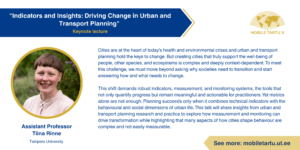
Moderator: Age Poom (University of Tartu).
Panelists:
- Tiina Rinne (University of Tampere)
- Luc Wismans (University of Twente/Goudappel)
- Pille Metspalu (HendriksonDGE/Estonian Association of Spatial Planners)
- Jiri Tintera (Tartu City)
Closing, best poster voting, and the announcement of Mobile Tartu 2028!
You can sign up for the optional bike tour at the conference registration desk. Bike tours will be guided by Karl Saidla and Madli-Johanna Maidla.
Participants will gather for the tour at the conference registration desk just after the closing ceremony. The bike tour will end at Lodjakoda where the informal closing event takes place.
Informal gathering at Lodjakoda next to the Emajõe Beach area! Be prepared for sauna and swimming, and bring with your own snacks and drinks. Light refreshments are provided by the organisers.
Instructions for authors
Oral presentations will have 15+5 minutes, including the transition between presenters. Presentations will be made from a local computer. All slides/files must be uploaded to a dedicated folder prior to the conference: more information is shared with oral presenters.
Posters must be prepared in A0 format and in portrait orientation, and printed and brought to the venue by the author. There are no further requirements for the layout.
Authors may use the Mobile Tartu conference logo solely within their oral or poster presentations, and not in any other context. Logo is available here.
You can download the conference programme here: