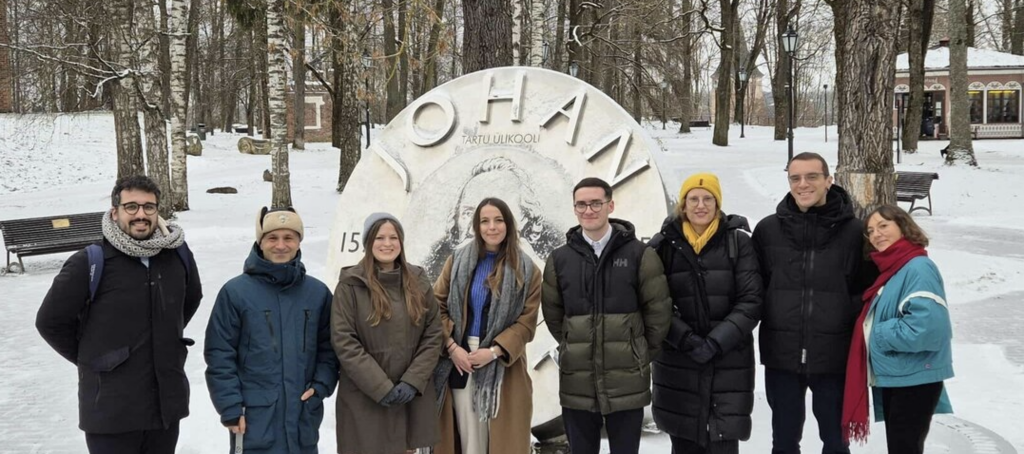

Call for EuroConnect online debates is open
EuroConnect partners have launched the call for participation in the online debates. All interested students from the EuroConnect consortium can now express their interest and register for the online debate series by completing the registration form by 17 April 2026.
Course Details
- Duration: 04.05.2026 – 29.06.2026
- Credits: possibility to earn 2 ECTS
- Study load: ~3 hours per week
- Form of study: fully online (synchronous session on Zoom)
- Language of instruction: English
- Certificate: Digital Certificate of Completion
- Fee: free of charge
About the Course
This course creates a transnational space in which students can engage in meaningful dialogue about key European issues and their implications for democratic life. It seeks to provide an environment where participants can both analyse major European challenges – such as climate transition, social inequality, digital transformation, and democratic backsliding – and critically reflect on how these issues intersect with their own local contexts and lived experiences.
The course is organised around three main types of online events, each with a distinct thematic focus but sharing a common pedagogical structure.
- European Issue Debates (EIDs) engage with broad cross-border themes such as climate transition, social inequality, digital rights, democratic backsliding, and EU social policy. Each session is chaired by one partner institution and is open to students from all participating universities.
- Curriculum Discussions (CDs) focus on the integration of civic competences, democratic engagement, and the European dimension within higher-education programmes and teaching practices. These sessions provide a space for students to reflect critically on how their study programmes prepare them for democratic participation and EU citizenship.
- Local Issues Discussions (LIDs) revolve around specific local or regional challenges that are clearly connected to European policies, norms, or debates. The primary objective of the LIDs is to highlight the local – European nexus by encouraging students to identify practical solutions and map relevant actors at different governance levels (local, national, EU, civil society, universities) who can contribute to change.
All events follow a shared methodological framework based on two interrelated elements. First, a democratic topic-selection procedure and second, each session is structured according to the Future Workshop format, organised around three phases: Critique (identifying problems and challenges), Utopia (imagining desirable futures), and Realisation (developing concrete and realistic pathways to change).